Stop Guessing: The Data-Driven Blueprint to a High-Converting Sales Funnel
Most sales funnels lose the majority of potential customers due to friction, poor messaging, and missed conversion opportunities. This guide breaks down seven practical, data-driven strategies to help you identify leaks, improve user flow, and turn more visitors into paying customers—without guesswork or unnecessary complexity.
2/25/20267 min read
Stop Guessing: The Data-Driven Blueprint to a High-Converting Sales Funnel
Meta Title: 7 Sales Funnel Strategies That Fix Leaks and Boost Revenue
Meta Description: Most funnels convert under 3%. Here are 7 proven, actionable strategies small business owners can use to reduce friction, recover abandoned carts, and
turn more browsers into buyers.


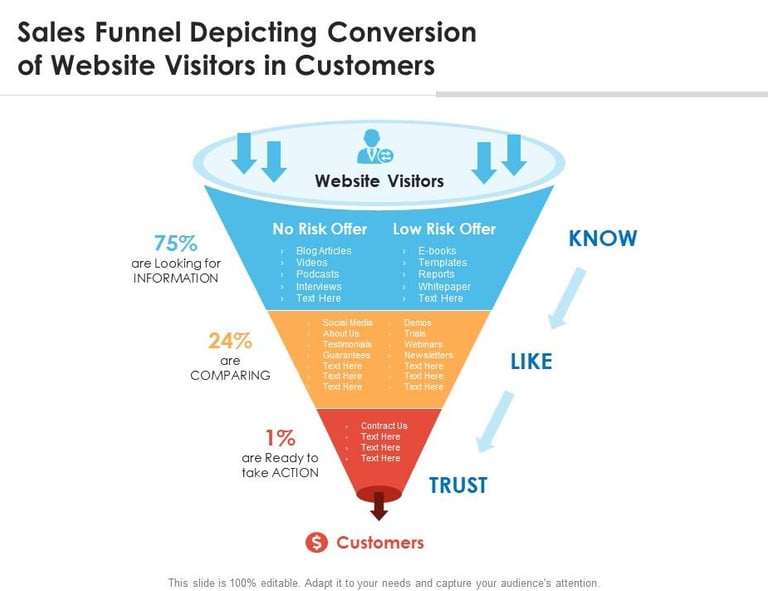
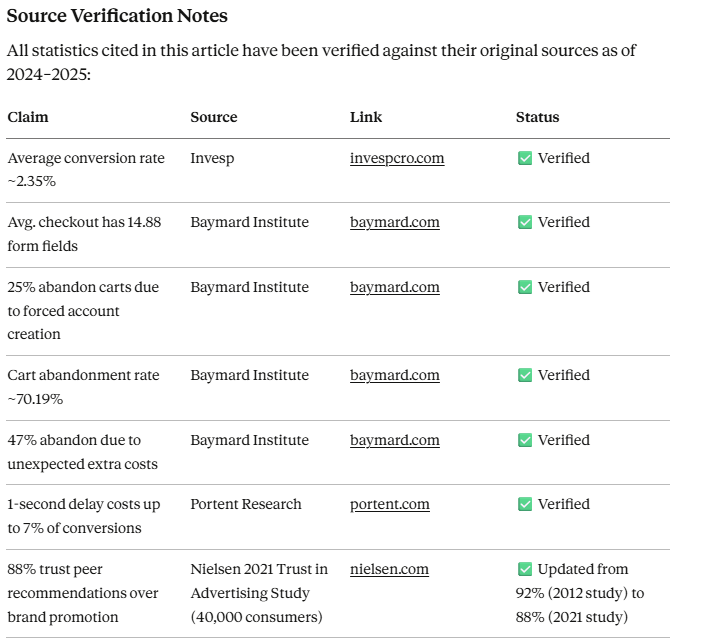
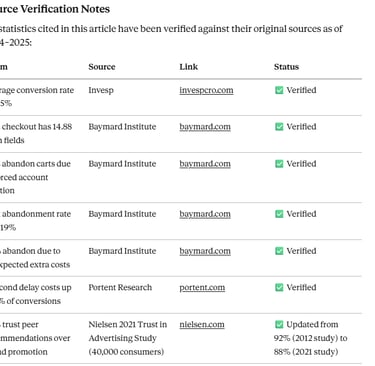
For every 100 visitors who land on your website, roughly 97 leave without buying anything. According to Invesp's conversion rate research, the average website conversion rate sits around 2.35%. That means the vast majority of your traffic — the traffic you're paying for or working hard to earn — walks out the door.
The good news: most conversion problems are fixable, and they have nothing to do with your traffic quality or your product. This guide breaks down seven strategies that address the most common leaks in small business sales funnels — no fluff, no theory, just practical fixes you can start implementing this week.

Why Funnels Fail: Three Root Causes
Before jumping to tactics, it helps to understand why funnels underperform.
Three culprits show up repeatedly:
Friction at decision points. Every extra form field, confusing navigation choice, or unclear next step costs conversions. Baymard Institute's checkout research found the average U.S. checkout flow contains 14.88 form fields — when 7 would do the job. That friction costs you sales every single day.
Misaligned messaging. If your ad promises "quick setup" but your landing page talks
about "enterprise-grade onboarding," visitors bounce. Every step of your funnel must
carry the same message.
Missing psychological triggers. People make buying decisions emotionally and justify
them rationally. Without social proof, clear risk reversal, or genuine urgency, you're asking
prospects to overcome their hesitation alone.
Fix these three, and your funnel's performance improves measurably — often within
weeks.
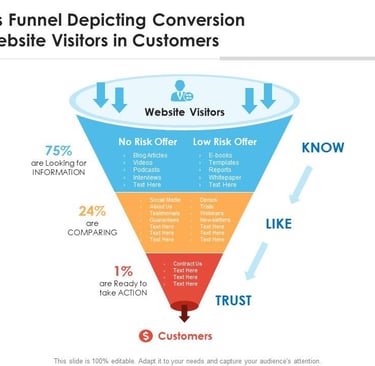
Strategy 1: Eliminate Friction First
Open your checkout page right now and count your form fields. Each unnecessary field has a measurable cost. Baymard Institute reports that an overly long or complicated checkout process causes nearly 1 in 5 shoppers to abandon their cart — and that's just one of 140 documented checkout usability issues they've identified.
Quick fixes that work immediately:
Enable guest checkout. Forcing account creation before purchase causes 25% of cart abandonments, per Baymard's research. Let people buy first and register later.
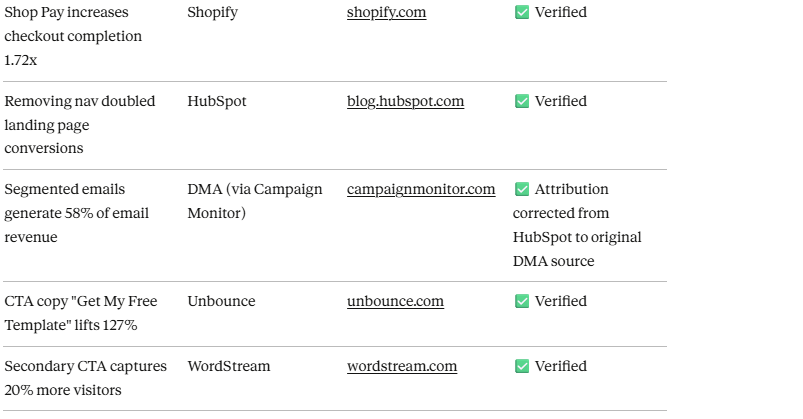
Add one-click payment options. Apple Pay, Google Pay, and PayPal cut checkout from multiple steps to two. Shopify reports that Shop Pay increases checkout completion by 1.72x.
Add a progress indicator. On multi-step forms, showing "Step 2 of 4" reduces perceived effort and improves completion rates.
Run a page speed test. Use Google PageSpeed Insights — free and takes two minutes. A one-second delay in page load time can reduce conversions by up to 7%, according to multiple speed performance studies.
Strategy 2: Build Lead Magnets That Pre-Qualify Buyers
Generic lead magnets attract large lists of low-intent leads. Specific ones attract smaller
lists of serious prospects — and they convert far better.
"Free Marketing Guide" pulls 1,000 emails and 50 buyers. "The 5-Email Welcome
Sequence That Converts Cold Subscribers Into Paying Clients" pulls 200 emails and 40
buyers. The math is clear: specificity filters out tire-kickers before they enter your funnel.
Your lead magnet should also align tightly with your core paid offer. If you sell consulting
packages, don't offer a beginner checklist. Offer something that signals the same level of
sophistication as your service.
Landing page essentials for lead capture:
Remove navigation menus. HubSpot's testing showed removing navigation links from
landing pages doubled conversions. Every exit link is a leak.Write outcome-focused headlines. "Get Our 47-Point SEO Checklist" describes a
feature. "Rank on Page 1 in 90 Days Without Paying for Ads" describes a result. The
second version converts significantly better — people buy outcomes, not deliverables.Place social proof near your opt-in form. One specific client testimonial with a name,
photo, and measurable result builds enough trust to lift opt-ins by 15–20%.
Strategy 3: Use Psychology Ethically
You don't need to be manipulative to use psychology well. You just need to understand how buying decisions actually happen.
Social proof: Vague claims undermine credibility. "Thousands of happy customers"
triggers skepticism. "2,847 customers across 34 countries, with 89% leaving 5-star
reviews" triggers belief. Specificity signals truth. Nielsen's 2021 Trust in Advertising
Study — conducted across 40,000 consumers globally — found that 88% of people trust recommendations from friends and family above all other forms of promotion. Place
testimonials directly beside or above your call-to-action buttons — not buried at the
bottom of the page.
Authentic urgency: Real scarcity works. Fake countdown timers destroy trust. If you have 10 coaching spots available this quarter, say so. If your timer resets on page refresh, your
most attentive prospects — the ones most likely to buy — will notice. Use reason-based
urgency instead: "Price increases Friday because we're adding live group coaching" feels
honest. "Offer expires soon!" feels like a pressure tactic.
Risk reversal: Build it directly into your CTA copy. "Start Free Trial — Cancel Anytime"
removes the fear of commitment. "Download Now — No Email Required" eliminates the
top objection on content offers. These small additions address buyer hesitation at the exact moment it happens.
Strategy 4: Optimize Your CTAs for Clarity
Your call-to-action button copy matters more than its color. "Get My Free Template" consistently outperforms "Submit" — Unbounce's button testing research showed a 127%
conversion lift from action-specific copy alone.
Every CTA should answer the visitor's implicit question: what happens when I click this? If
that answer isn't immediately obvious, you're losing conversions.
Add a secondary CTA for hesitant visitors. Not everyone is ready to buy. A lower-
commitment option — "Save for Later," "See How It Works," or "Download the Free Guide"
— captures visitors who weren't ready for your main offer. WordStream's research found
adding a secondary CTA can capture an additional 20% of visitors who weren't ready to
take the primary action.
Strategy 5: Recover Abandoned Carts Systematically
According to Baymard Institute, the average cart abandonment rate is 70.19%. The leading
cause? Extra costs revealed at checkout — shipping fees, taxes, and service fees surprise
47% of abandoning shoppers, per Baymard's research. The fix is showing total estimated
cost before the checkout page.
A simple 3-email cart recovery sequence:
Email 1 (1 hour after abandonment): Gentle reminder. "Your cart is saved — here's the link to complete your order." Answer one common objection in plain language. No discount yet.
Email 2 (24 hours later): Add social proof and soft urgency. "Over 2,800 customers are already using [product]. Your cart is reserved for the next 48 hours." Include a specific testimonial.
Email 3 (72 hours later): Offer a discount or bonus only if needed. "Complete your order in the next 24 hours and save 10%." This sequence, when executed consistently, typically recovers 15–30% of abandoned carts.
Strategy 6: Build an Email Sequence That Earns the Sale
Most small businesses either skip the email nurture sequence entirely or send batch-and-blast newsletters. Neither converts well.
A structured sequence works like this:
Welcome email: Deliver your lead magnet immediately, then add one unexpected bonus tip they can use in five minutes.
Education email: Solve a small, specific problem related to your offer. Demonstrate expertise.
Transition email: Connect your teaching to your product naturally — not as a pitch, but as a logical next step.
Conversion email: Make a clear offer with a deadline and a single call-to-action.
Behavior-based segmentation amplifies this significantly. According to DMA research cited by Campaign Monitor, segmented and targeted emails generate 58% of all email revenue despite being a fraction of total sends. Someone who visited your pricing page but didn't buy needs different messaging than someone who downloaded your guide and never clicked anything else.


Your First 30 Days: Where to Start
If you implement everything at once, nothing gets measured properly. Prioritize in this
order:
Fix mobile friction first — over 50% of traffic is now mobile.
Remove unnecessary form fields — a 10-minute task that can lift conversions 15–30%.
Add one specific testimonial near your primary CTA.
Set up a 3-email cart recovery sequence.
Run one A/B test on your headline — let data pick the winner.
Done consistently, these five actions typically deliver a 25–40% revenue increase within
30 days.
Ready to See Where Your Funnel Is Leaking?
We work with small business owners to identify the specific friction points, messaging
gaps, and missed opportunities costing them conversions. No generic advice — just a clear
picture of what to fix first.
Strategy 7: Track the Metrics That Actually Tell You Something
Most small businesses either ignore analytics or stare at vanity metrics that don't connect to revenue. Here are the five numbers worth watching weekly:
Conversion rate by funnel stage — not just overall. If 50% opt in but only 2% buy, your email sequence is broken, not your traffic.
Average time to convert — if people typically buy within 3 days but your pitch email lands on day 7, you're missing the window.
Drop-off page — where specifically are people leaving? That page needs attention first.
Cost per acquisition vs. customer lifetime value — the ratio determines whether your funnel is profitable at scale.
Mobile vs. desktop conversion gap — if desktop converts at 4% and mobile at 1%, your mobile experience has a friction problem.