Business Freedom Automation: How to Reclaim Hours Every Week Without Sacrificing Growth
Discover how business automation transforms entrepreneur time management. Learn five proven automated marketing systems that deliver work-life balance while scaling revenue — without the burnout.
Maxcell Graves
2/25/20267 min read
You didn't start your business to become a slave to it.
Yet here you are — checking emails at midnight, manually following up with leads during dinner, and spending Sunday afternoons batch-creating social media posts. The irony isn't lost on you: you launched your business seeking freedom, but now you're trapped in an endless cycle of marketing tasks that demand your constant attention.
According to a Gallup study, small business owners work an average of 52 hours per week — with 62% reporting they regularly clock 50 or more hours. That's a significant portion of your time consumed by tasks that, with the right systems in place, could largely run themselves.
Here's what most business owners don't realize: marketing automation isn't just about efficiency — it's about liberation.
The right automated systems can handle lead generation, nurturing, and conversion while you focus on strategy, spend time with your family, or deliver exceptional service to your existing clients. This isn't about losing the personal touch that makes your marketing effective. It's about building systems that maintain your authentic voice while freeing you from repetitive, manual work.
In this guide you'll discover five specific automation frameworks you can implement, how to build systems without losing authenticity, and a practical 30-day roadmap to get started.
Download our free Automation Audit Checklist to identify which tasks are stealing your time right now.
Introduction


Why Business Owners Stay Trapped in Marketing Micromanagement
The Freedom Paradox Every Entrepreneur Faces
Remember why you started your business? You envisioned flexibility, control over your schedule, and the ability to work from anywhere. Instead, many owners find they've created a demanding second job.
Social media algorithms dictate when you post. Leads expect immediate responses. Your email inbox has become a second full-time job. The belief that "personal touch" requires your personal presence 24/7 is costing you the freedom you started your business to achieve.
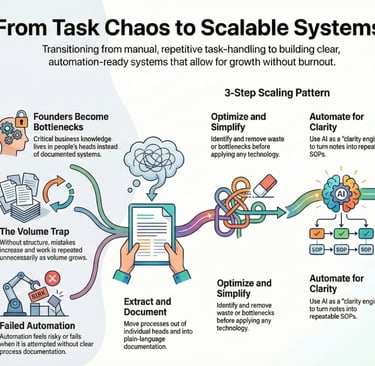
The Real Cost of Manual Marketing
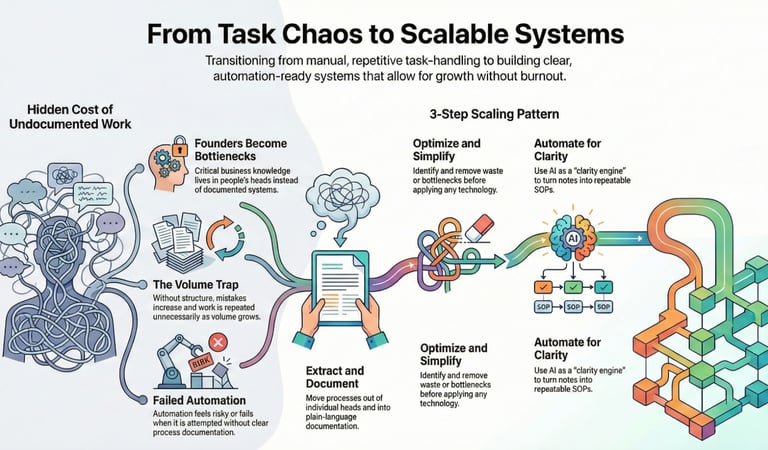
Time cost: The average small business owner works 52 hours per week. When routine marketing tasks dominate that schedule — scheduling posts, manually following up, sorting leads — it crowds out higher-value activities like strategy, sales conversations, and client delivery.
Opportunity cost: While scheduling Instagram posts, what goes neglected? Product development stalls. Partnership opportunities slip away. Rest becomes a luxury you can't afford.
Revenue cost: Inconsistent marketing creates inconsistent revenue. When you're too busy to follow up promptly, you lose deals. When exhaustion causes you to skip content creation, your pipeline dries up.
Why "Just Hire Someone" Isn't the Complete Answer
Many entrepreneurs believe hiring solves the problem. While team members are valuable, delegation without systems creates new challenges. Team management becomes another time drain. If your team needs constant input and approval, you haven't freed your time — you've just redistributed it.
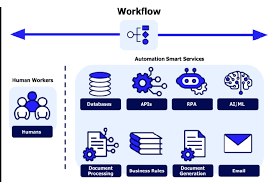
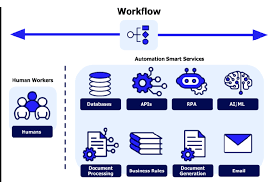
The crucial difference: delegating tasks means someone else does the work. Automating systems means the work happens without human intervention. The most effective approach combines both — automated systems that your team optimizes rather than manually executes.

The Business Freedom Automation Framework: 5 Systems to Implement
System 1 — Automated Content Distribution Engine
Small business owners often struggle to produce content consistently, leading to burnout and missed opportunities for engagement.
Tool: AgenticFlow
To combat the challenge of consistent content production, consider implementing AgenticFlow as part of your automated content distribution engine.
This tool streamlines the process of repurposing your core content into various formats while distributing it across multiple channels at optimal engagement times.
For example, after creating a long-form article, AgenticFlow can automatically generate social media posts and email content, allowing you to maintain your content marketing without adding to your workload.
System 2 — Intelligent Lead Capture and Qualification
Manually sorting leads can be time-consuming and inefficient, leading to missed opportunities with qualified prospects.
Tool: FlexiFunnels
To simplify lead capture and qualification, FlexiFunnels is an excellent solution.
This tool allows you to create targeted landing pages with effective lead magnets, while also enabling automated lead segmentation based on user interactions.
For instance, if a visitor downloads a specific resource, FlexiFunnels can automatically tag them in your CRM and route them to the right follow-up sequence, ensuring that you only engage with leads who are genuinely interested in your offerings.
System 3 — Behavior-Triggered Nurture Sequences
What it does: Sends personalized content based on prospect actions rather than arbitrary time delays.
Implementation:
1. Map your customer journey, identifying key decision points
2. Create email sequences for different paths — interested but not ready, comparing options, ready to buy
3. Set triggers based on specific behaviors: clicked pricing link, downloaded a case study, visited your testimonials page three times
4. Include automated check-in surveys to gather feedback at key intervals
Tools to consider: Accumbamail, Drip, or Ontraport for sophisticated conditional logic.
Why behavior-based beats time-based: Someone who downloads your pricing guide and visits your booking page three times demonstrates different intent than someone who opened one email six weeks ago. Behavior-triggered automation responds to actual interest level, not just how long someone has been on your list.
System 4 — Automated Appointment and Onboarding Flow
What it does: Handles scheduling, preparation, reminders, and initial onboarding without manual coordination.
Implementation:
Scheduling appointments and managing onboarding processes can consume valuable time and lead to no-shows.
Tool: Lunacal
To tackle the complexities of appointment scheduling and onboarding, Lunacal can transform your processes.
This tool not only simplifies calendar booking with intelligent availability but also automates reminders via email and SMS.
For example, you can set up Lunacal to send automatic text reminders to clients before their appointments, significantly reducing no-show rates while you focus on other important tasks.
System 5 — Passive Income Content Machine
What it does: Generates ongoing revenue through evergreen automated funnels that work independently of your active time.
Implementation:
1. Record an evergreen webinar, video series, or email course that delivers genuine value and makes a strategic offer
2. Build an automated email funnel that nurtures registrants and presents your offer at the right moment
3. Create entry-level products with automated upsell sequences
4. Set up affiliate automation that tracks referrals and manages commissions
Tools to consider: EverWebinar or Demio for automated webinars, Teachable or Kajabi for course hosting, ThriveCart for payment processing.
Once built, an evergreen funnel runs indefinitely. You create it once and generate revenue repeatedly without additional active time investment. This is how you begin to decouple income from hours worked.
Book a free automation strategy call to identify which system would create the biggest immediate impact for your specific business.

Implementing Automation Without Losing Your Brand's Human Touch
The Personalization Paradox in Automation
Here's what stops most entrepreneurs from automating: the fear of seeming robotic or impersonal. This concern is valid — poorly implemented automation does feel cold and generic.
But here's the paradox: thoughtful automation enables more personalization, not less.
By using dynamic content and behavioral segmentation, you can deliver more relevant, timely messages than you could manually. Instead of sending the same newsletter to everyone, automation allows you to send different content based on stated interests, behaviors, and stage in the customer journey.
The 80/20 rule applies here: automate the 80% of routine communication, then personally engage in the 20% of interactions that truly require your unique insight or expertise.
Building Authenticity Into Automated Systems
Your automated systems should sound like you. Here's how to make sure they do:
Document your voice: Write down your communication style — word choices, sentence structure, humor level. Include examples of copy that sounds "like you" versus copy that doesn't. Reference this every time you build a new sequence.
Build in strategic human touchpoints: Identify the moments where automation should pause and alert you to engage personally:
When a lead demonstrates high buying intent
After someone consumes a significant amount of your content
When survey responses reveal a specific pain point you can uniquely address
At milestone moments in the client relationship
Use video inside sequences: Record short, personal video messages to include in automated emails. This combines scalability with face-to-face connection that text alone can't replicate.
Create surprise-and-delight moments: Automate unexpected value delivery — a bonus resource triggered by engagement, a handwritten note sent after a purchase, a check-in message at a client milestone.

Your 30-Day Roadmap to Business Freedom Automation
Implementing automation can feel overwhelming without a clear plan.
Tool: Jogg.ai
As you embark on your 30-day journey to business freedom automation, utilizing Jogg.ai can help streamline your planning process.
This tool allows you to map out your automation strategy effectively, helping you visualize every step of your implementation.
For instance, you can document your time-tracking results, prioritize tasks, and outline your chosen automation systems with ease, ensuring that you stay on track and don’t overlook any vital steps.

Conclusion: Your Path to Business Liberation Starts Now
Problem: Entrepreneurs often feel trapped in their businesses due to repetitive tasks.
Tool: ChatGPT
Placement Paragraph: As you move towards achieving business freedom, leveraging ChatGPT can enhance your communication strategies.
This AI-powered tool can help you draft personalized messages for your audience, ensuring that your automated communications retain a human touch.
By utilizing ChatGPT to generate engaging content for your email sequences, you can maintain authenticity while saving time, allowing you to reclaim your focus on strategic initiatives that drive growth.
Take Action Now
Primary CTA: Book your free automation strategy session — we'll identify your biggest time drains and map your custom automation roadmap.
Secondary CTA: Download "The Freedom Automation Blueprint" with templates, tool comparisons, and implementation checklists.
Tertiary CTA: Join our weekly automation tips newsletter for practical strategies delivered every Tuesday.